HMLV Manufacturing
Flexible Manufacturing
We do not set MOQ; we set standards
A stable manufacturing path for low-volume, high-mix programs
Serving prototypes, trial builds, and low-volume production, Ledge moves material, process, test, and supply-chain judgment forward before manufacturing starts. The result is a delivery process that is planned, traceable, and repeatable.
Through-hole soldering engineering decision
Through-hole soldering: choose the right process for each board
Based on objective evaluation of wave soldering, selective wave soldering, automatic soldering, and manual soldering, Ledge selects and combines a suitable soldering route for each product requirement.
Based on engineering data from thousands of PCBA programs each year, we built a multi-method decision model for through-hole soldering. Order volume, delivery urgency, PCB design, component density, and final reliability requirements are evaluated across four methods and combined when necessary.
Traditional wave soldering
Selective wave soldering
Automatic soldering machine
IPC-A-610 Class 3 hand soldering
Through-hole fill requirements in demanding sectors
For deep-sea equipment, high-vibration industrial equipment, rail transit, medical core modules, and precision instruments, through-hole joints are expected to approach or reach 100% solder fill rather than merely pass a minimum standard.
Selective wave soldering and skilled IPC-A-610 Class 3 hand soldering can both meet high-reliability requirements, but manual work depends heavily on operator condition, stability, and process discipline.
Skill gap and delivery bottleneck
Even in Shenzhen, one of the world's densest electronics manufacturing ecosystems, senior hand-soldering resources are becoming scarcer.
Skilled manual soldering can be consistent and traceable, but it is time-consuming, extends delivery cycles, and depends on operator discipline and condition.
Soldering method matrix
Traditional wave soldering
- Advantage
- More efficient than selective wave or manual soldering for higher-volume through-hole boards with regular design and solder-side access; for batches above 500 units, Ledge first evaluates a wave-soldering-plus-fixture route.
- Boundary
- Tall component shielding can cause missed solder or defects.
- Heat-sensitive components face thermal shock during full-board soldering, and nearby SMT components may receive secondary heat exposure.
- Each PCB usually requires a dedicated fixture, making fixture management and accumulated cost complex in high-mix programs.
- Bridging, solder shorts, and skips may require manual touch-up.
- If tall components exist on the solder side, carrier and solder-wave access may be limited.
Selective wave soldering
- Advantage
- Stable soldering quality and traceable parameters for high-reliability through-hole joints; products requiring near-100% solder fill can be validated through programmed parameters and process windows, and after daytime setup, night-shift operators can run urgent jobs.
- Boundary
- Speed is not high, but stability and flexibility are stronger.
- First-run programming, setup, and process tuning usually take 30 minutes to 2 hours.
- Nozzle space, adjacent component distance, board thickness, thermal capacity, and preheat effectiveness limit coverage.
- Equipment cost and maintenance are high, so it must be used where it truly fits.
Automatic soldering machine
- Advantage
- Fast programming for medium/small batches, regular through-hole parts, or sensitive positions; local heat can be controlled precisely to reduce secondary heat exposure to nearby components.
- Boundary
- Medium speed, requires periodic solder feeding and maintenance, and depends on fixture, path, and solder-joint accessibility.
IPC-A-610 Class 3 hand soldering
- Advantage
- Highest flexibility for special-shaped components, very small batches, and positions equipment cannot cover. Skilled operators can achieve high consistency and traceability, and can meet high solder-fill requirements when needed.
- Boundary
- Low efficiency and skill-dependent; usually arranged on day shift only, so urgent orders can affect delivery time.
- Manual operation has condition fluctuation and board-burn risk, requiring strict first-article confirmation, process records, and review.
Not the most expensive option, the right option
When introducing selective wave soldering, Ledge compared soldering precision, programming efficiency, maintenance cost, long-term stability, and product fit through multiple rounds of evaluation and testing, then selected a solution suited to high-mix, low-volume, high-reliability work.
Equipment selection is not the endpoint. We maintain long-term technical cooperation with suppliers, continue optimizing parameters for special products, and convert validation results into an internal process database.
The remaining 40% is handled through automatic soldering, wave soldering, and IPC-A-610 Class 3 hand soldering in combination.
For larger batches, traditional wave soldering enters the process combination because fixture cost can be amortized and overall efficiency may be higher.
After selective wave setup is complete, night-shift operators can keep the process running, reducing dependence on hand-soldering staff normally scheduled for day shift only.
Selective soldering limits: stated clearly
- Adjacent component distance limitIf an SMT component is closer to a through-hole pin than the selective soldering nozzle diameter, selective soldering cannot be used safely and may damage nearby components.
- Uneven preheat on large boardsFor large boards, early soldering points may be well preheated while temperature drops by the time the nozzle reaches the other side, causing soldering variation.
- Thick boards and high thermal capacityBoards thicker than 2.4 mm, heavy copper, or large heat-sinking areas make solder fill more dependent on preheat and dwell time, requiring longer soldering and repeated process-window validation.
- Programming and setup timeFirst production requires programming and process-parameter tuning, usually taking 30 minutes to 2 hours, so small batches must balance value against setup cost.
Decision scenarios
Wave soldering evaluation for batch orders
When order cycles are stable, single-batch quantity is larger, through-hole parts are regularly distributed, and the solder side has no tall component obstruction, Ledge first evaluates a traditional wave soldering + fixture + touch-up route.
In this scenario, even with fixture cost, total efficiency may exceed full manual soldering or point-by-point selective soldering.
Equipment handoff for urgent R&D projects
When a customer needs a small quantity of PCBA with through-hole connectors delivered within 24 hours and sensitive SMT components nearby, engineering first determines which joints can be completed by selective wave soldering at night and which sensitive positions should be handled by automatic soldering or hand-soldering review.
Our value is not in promising one machine. It is in quickly judging the product environment, solder-fill requirement, soldering method, staffing, and a workable route that balances process fit, schedule, and cost.
Struggling with through-hole soldering efficiency and reliability?We can evaluate your PCB free of charge and recommend a combined soldering route.Contact an engineer for PCB evaluation
Manufacturing network and downstream capability
Dual-base layout and hardware capability
Bao'an, Shenzhen handles process standardization, supply-chain management, and quality control. Longgang, Shenzhen provides flexible capacity. A North America manufacturing base is under planning for localized rapid response.
Bao'an, Shenzhen Base (Engineering and Quality Hub)
- SMT Line
- Automatic solder paste printing, 3D SPI, YAMAHA YSM10 + YSM20R, 10-zone reflow, inline AOI
- Inspection and Rework
- 4 offline AOI systems, 3 SMT intelligent first article inspection systems, X-Ray, BGA rework station
- DIP and Assembly
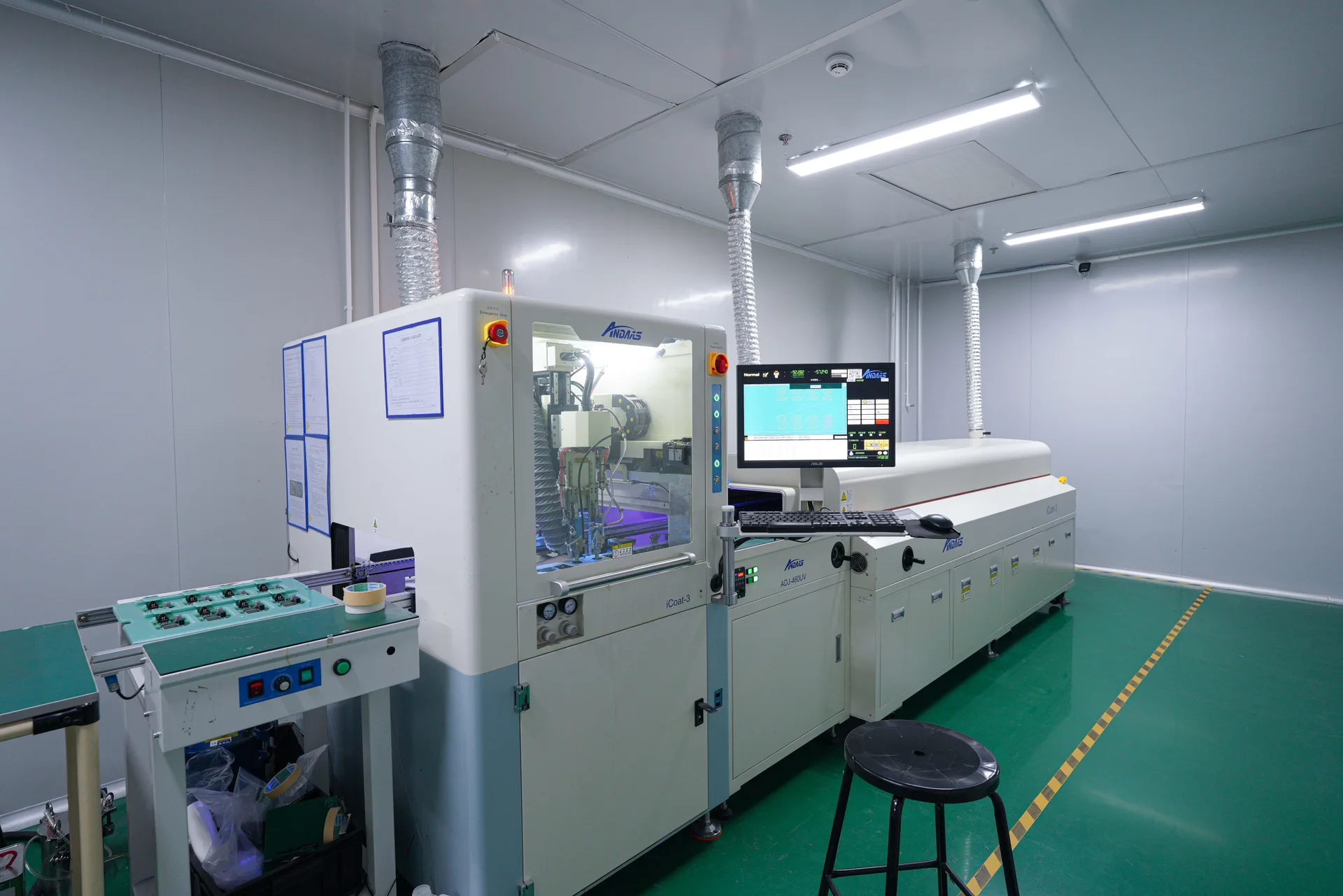
- Selective wave soldering, automatic soldering, insertion line + wave soldering, ICT/FCT, conformal coating, assembly line
- Supporting Services
- CNC, 3D printing, injection molding
Longgang, Shenzhen Base (Flexible Capacity)
Built with partners, with faster SMT line capacity, larger DIP workshop space, and assembly space for staged customer capacity peaks.
North America Layout: Canada Manufacturing Base (site selection stage)
Focused on localized rapid response for North American customers, with manufacturing site selection moving forward.
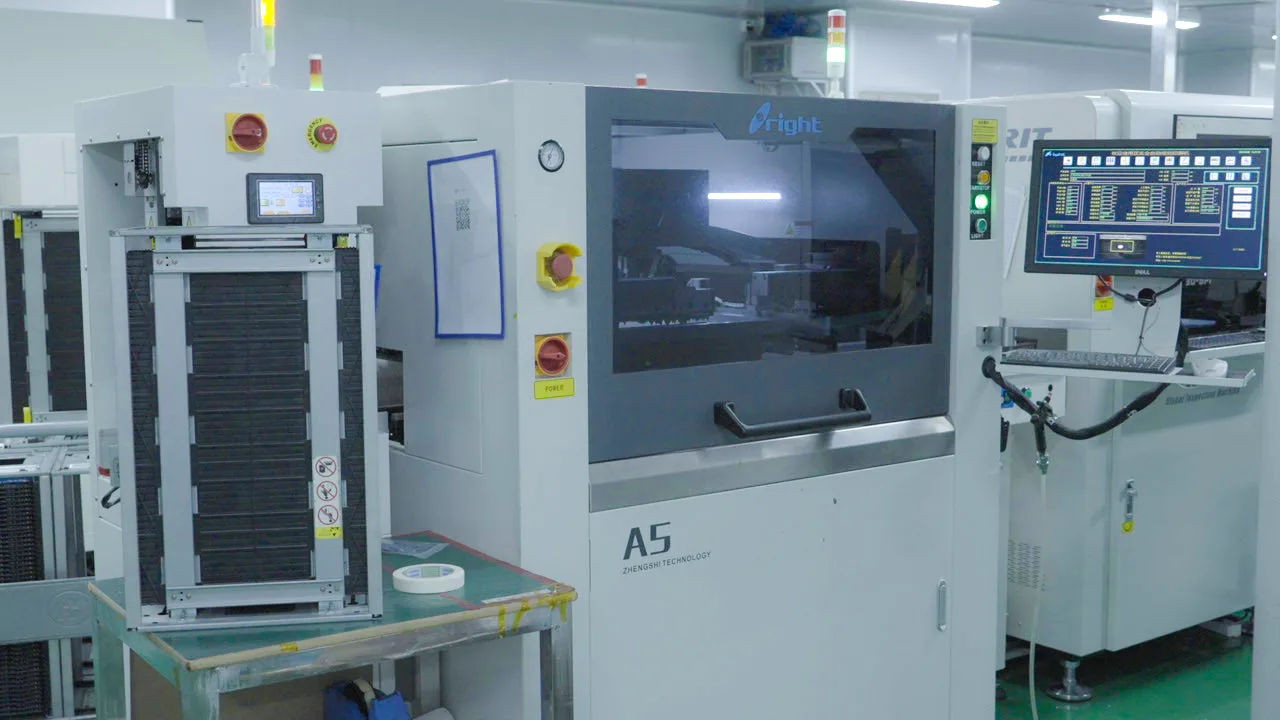
SMT line
Fully automated SMT line with fast changeover capability, down to 01005 components for high-precision placement
Automatic solder paste printing -> 3D SPI -> YAMAHA YSM10 + YSM20R -> 10-zone reflow -> inline AOI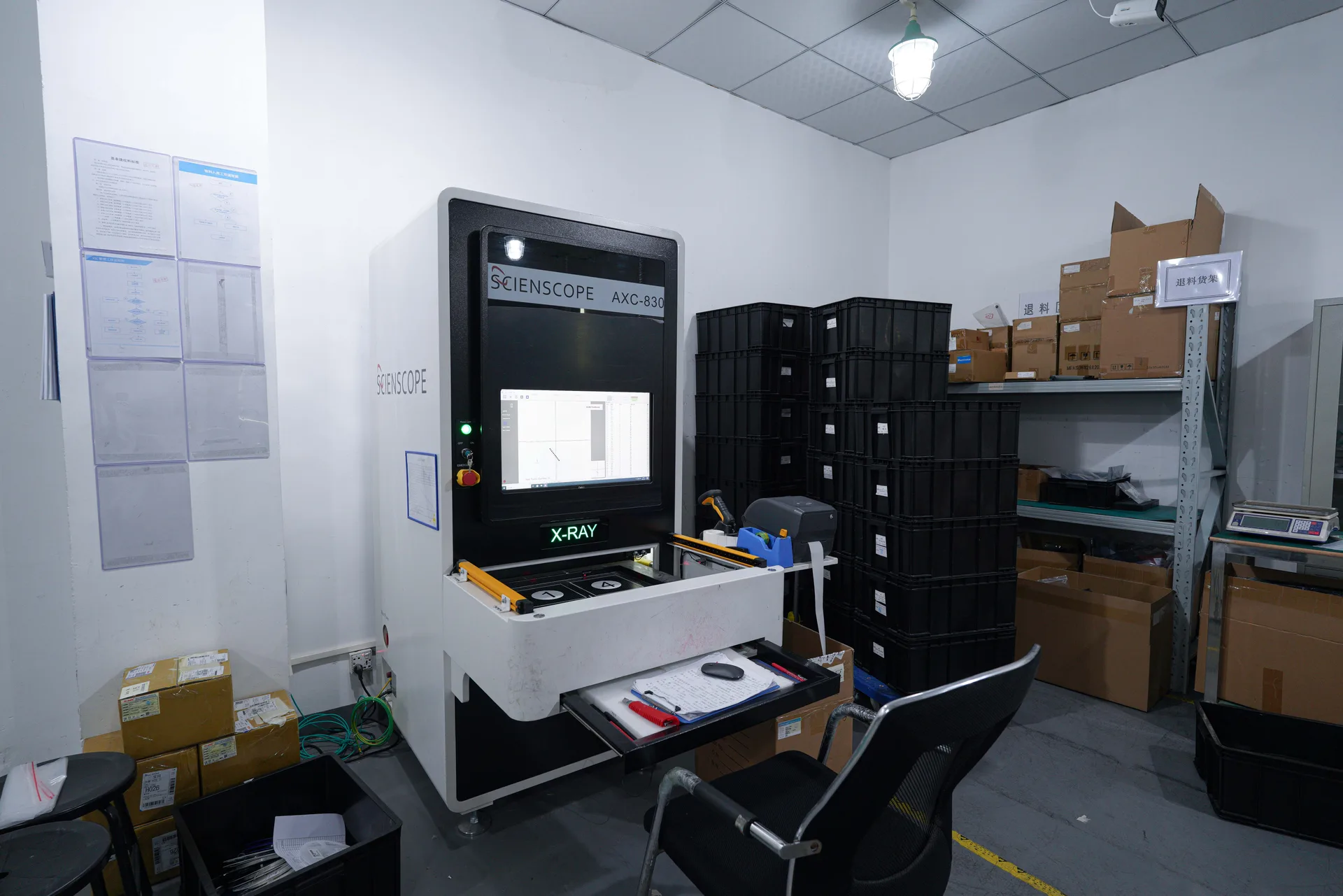
Inspection and rework
AOI, X-Ray, and SPI inspection plus professional rework equipment are used to verify critical solder joints against IPC-A-610 Class 3 criteria
Offline AOI -> X-Ray inspection -> BGA rework station -> data judgment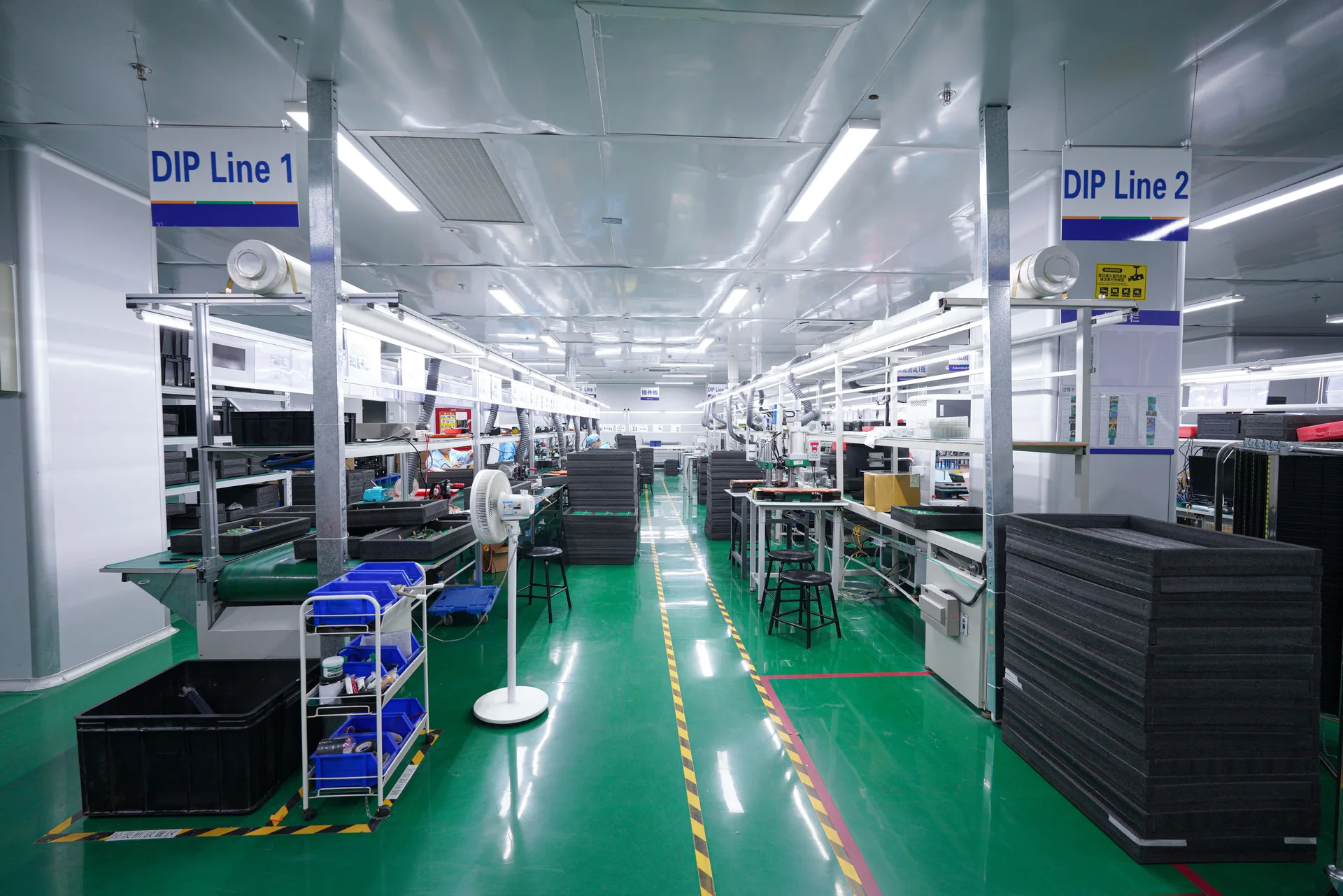
DIP and assembly
Flexible back-end soldering and assembly capability, matching the right process combination to each product
Selective wave soldering -> automatic soldering -> ICT/FCT -> conformal coating -> assembly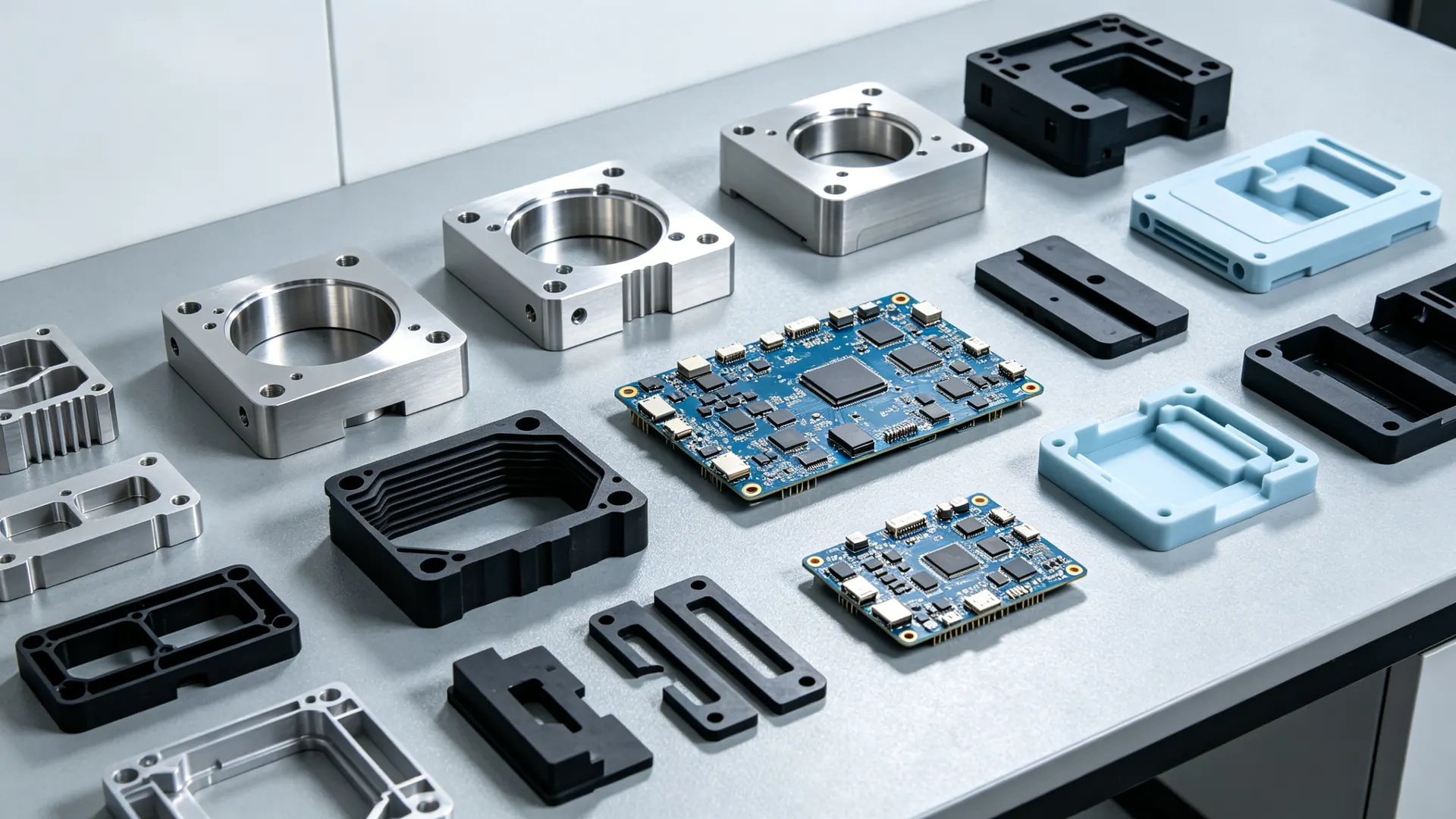
Supporting services
Enclosures, mechanical parts, and auxiliary services reduce customer supply-chain coordination work
CNC machining -> 3D printing -> injection molding -> enclosure supportValidation and assembly
Testing and assembly validation
Testing, programming, assembly, and packaging are standard steps in flexible manufacturing, not optional services. Ledge can build test environments quickly for low-volume trial builds and create traceable validation records for released batches.
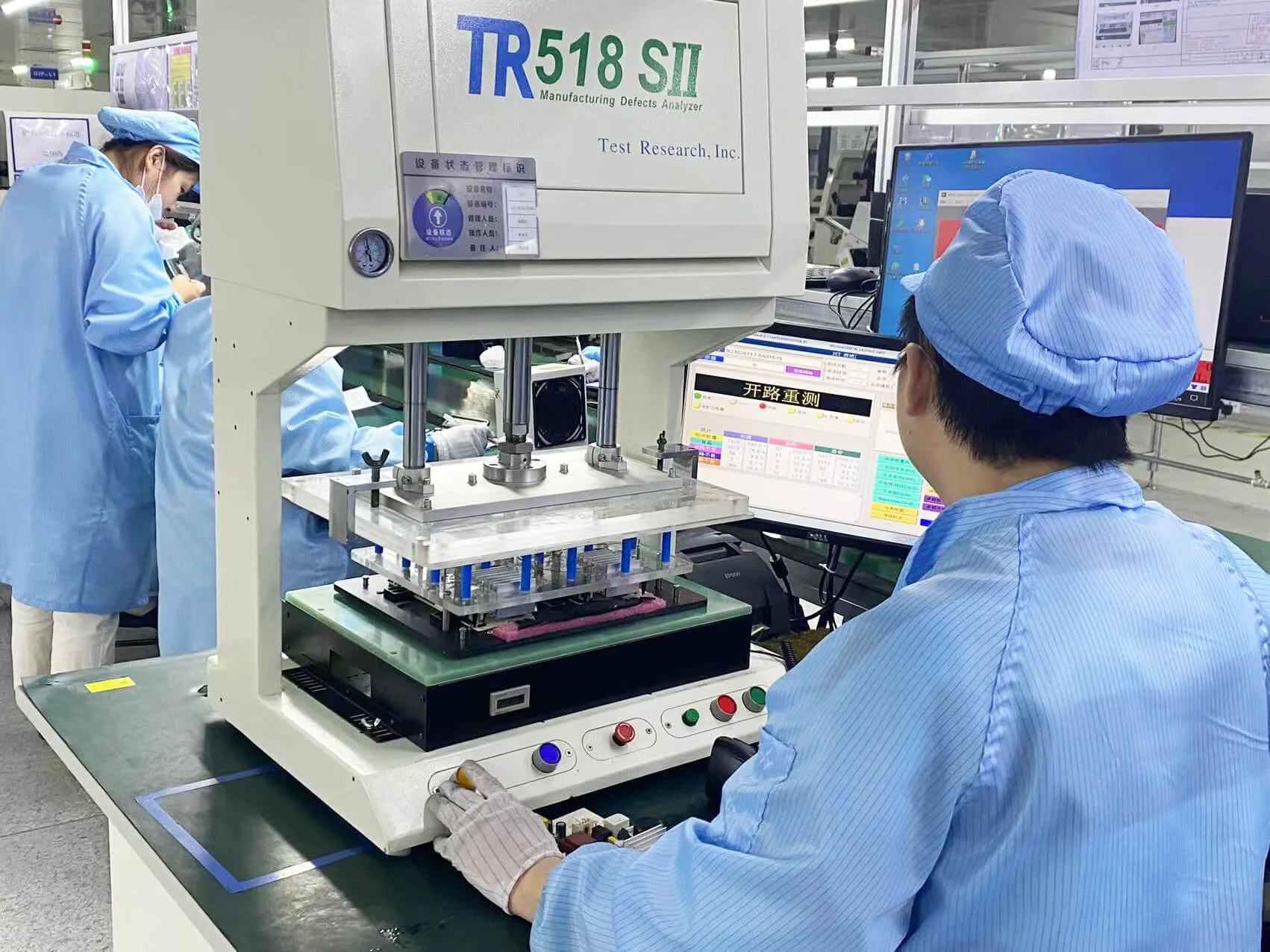
ICT and FCT testing
ICT and FCT test solutions with custom fixtures and test programs covering analog/digital signals, power management, communication interfaces, and traceable data upload to the proprietary system.
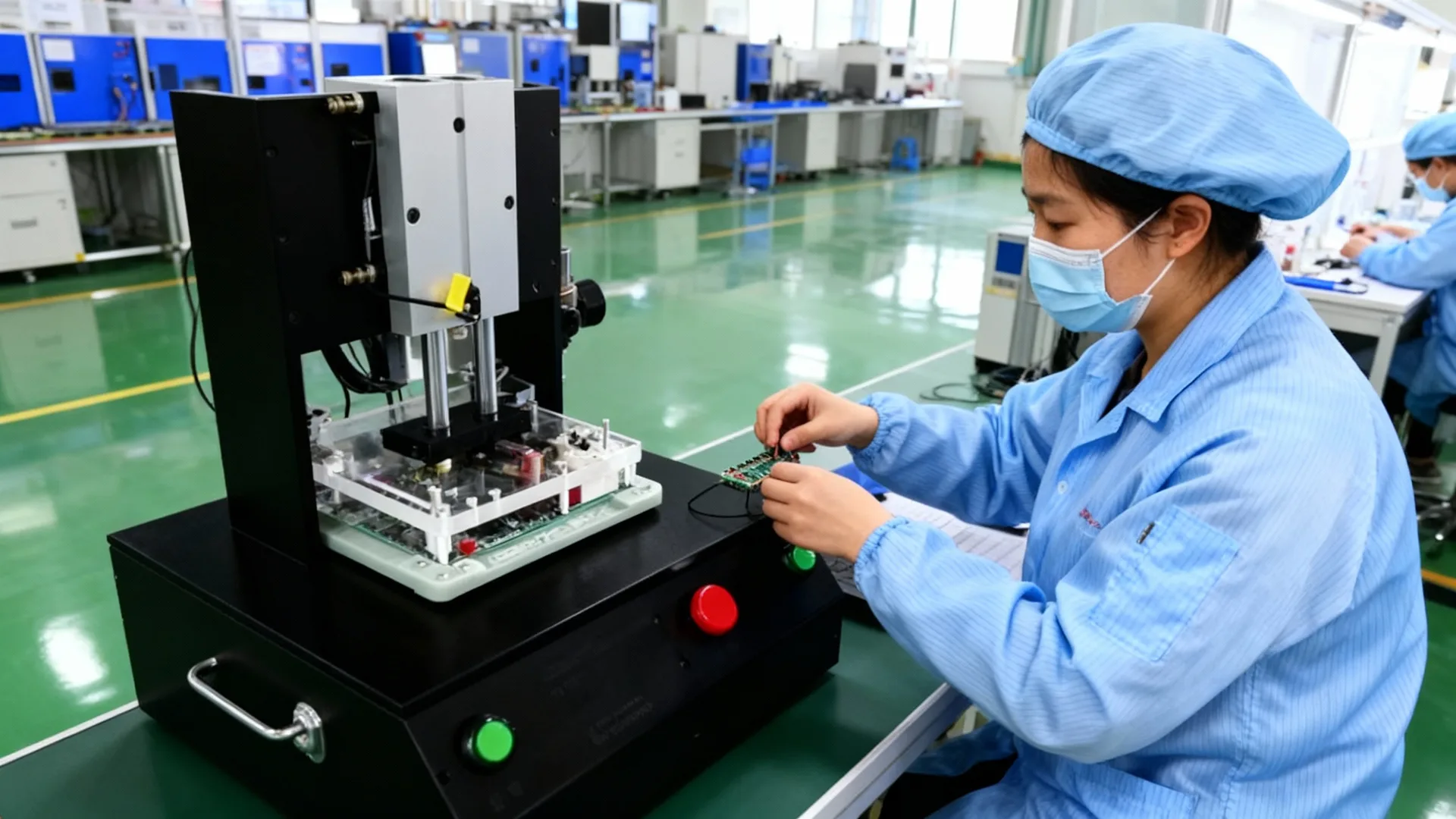
Programming and firmware loading
Batch programming for MCU, FPGA, Flash, and related devices, including encryption, serial-number writing, and verification through Xeltek, Elnec, and dedicated JTAG/SWD adapters.
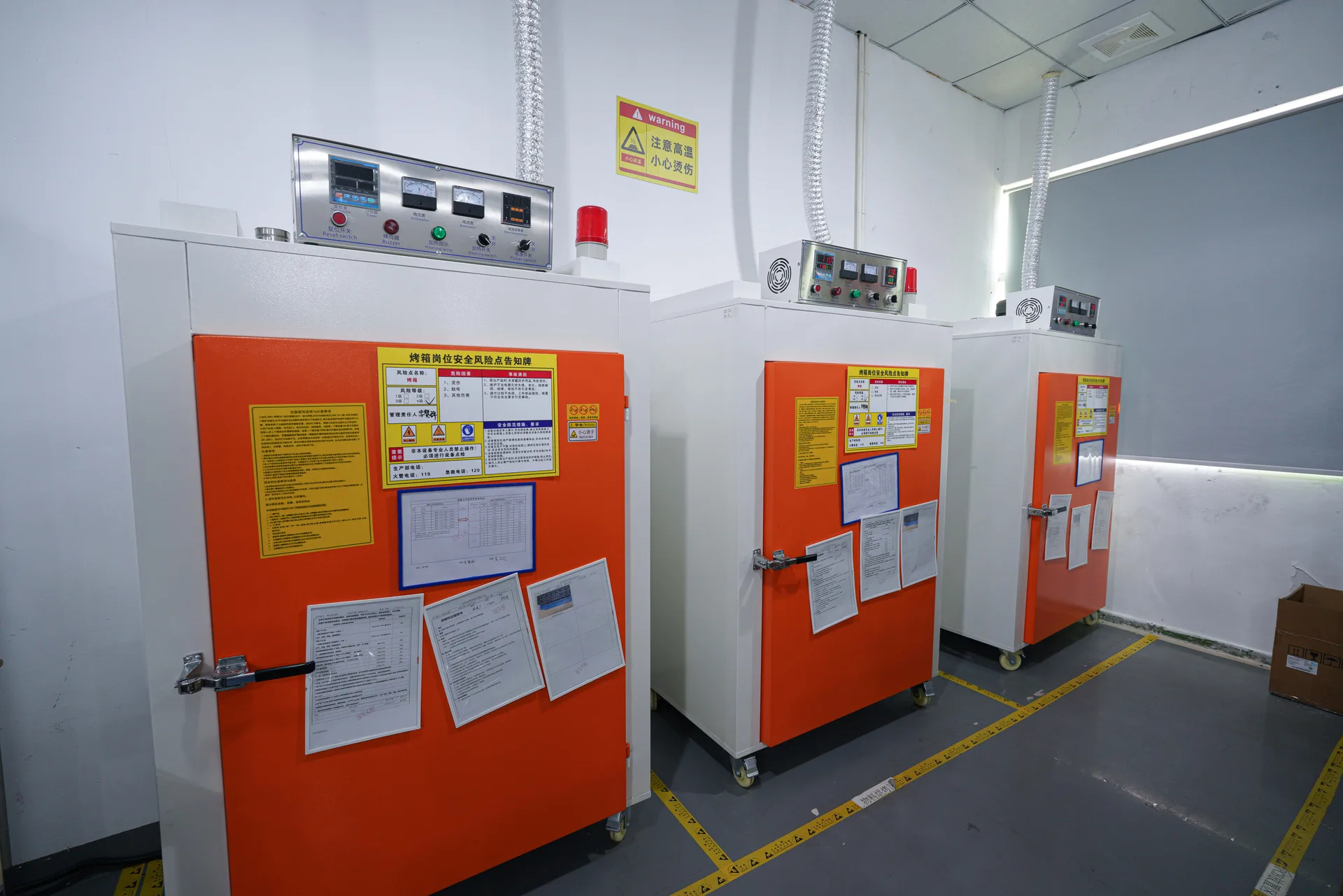
Burn-in and environmental testing
For medical, marine, and other high-reliability products, configurable temperature-humidity cycling, high-temperature aging, vibration testing, and related validation expose early failure risks.
Assembly and packaging
PCBA cleaning, post-conformal-coating assembly, enclosure installation, harness organization, ESD-safe packaging, and custom packaging reduce back-end coordination cost for customers.
Field engineering discipline
Frontline experience turned into engineering capability
The foundation of flexible manufacturing is the ability to convert team experience into reusable tools, process discipline, and traceability systems, not just equipment parameters.
The SMT intelligent first article inspection system was independently developed by Ledge founder Zaihui Ye and manufacturing center lead Jianyong Liang during their years on electronics manufacturing lines. It solved the error-prone and inefficient manual first-article confirmation problem and was later sold to EMS providers around the world. The system predates Ledge Technology, but its engineering philosophy of error prevention, efficiency, and traceability is now embedded in the company's engineering management system.
Reduce manual first-article inspection errors
Automatically compare component parameters to flag missed or incorrect checks.
Traceable process records
Inspection results are archived by batch to support traceability.
Experience converted into tools
The system came from hands-on work with thousands of material types every day and was later embedded into engineering management.
High-caliber engineering team
Soldering specialists with 10+ years of IPC-A-610 Class 3 experience, dedicated NPI and process engineers, daily switching across 10+ product types, and a proprietary order tracking system that links full-process material records within covered projects.
Why Ledge
Why customers choose Ledge flexible manufacturing
Zero MOQ risk
Cut-tape and as-needed production mean customers pay for practical usage, with very low idle inventory risk.
Experienced engineering team
4000+ annual batches provide historical data for early risk judgment.
Domestic alternative validation in NPI
Alternative material paths are evaluated early to reduce cost and improve resilience.
Global supply network
We prioritize DigiKey, Mouser, Arrow, and manufacturer-authorized channels, retaining source and lot records for low-volume programs.
Quality consistency
Years of industrial customer audits and stable delivery reduce repeated audit burden for some customers.
Dual base plus future global layout
Bao'an defines standards, Longgang provides flexible capacity, and Canada planning continues.
Engineering-driven process selection
PCB design, volume, delivery time, solder-fill requirement, and reliability risk are used to match wave soldering, selective wave, automatic soldering, and hand soldering into the right combination.
A sourcing model built for low-volume programs
Some EMS commercial models optimized for higher-volume, full-reel purchasing make MOQ and residual-material responsibility part of the project terms. Ledge focuses on low-volume, high-mix work, using cut-tape management, demand-based purchasing, and flexible sourcing to reduce inventory exposure and manage project risk with the customer.
Need low-volume, fast delivery, testing, and assembly in one path?
From concept to finished product, we lower the project start threshold and accelerate market entry. Testing, programming, assembly, and packaging are delivered inside one traceable system.
Contact an engineer